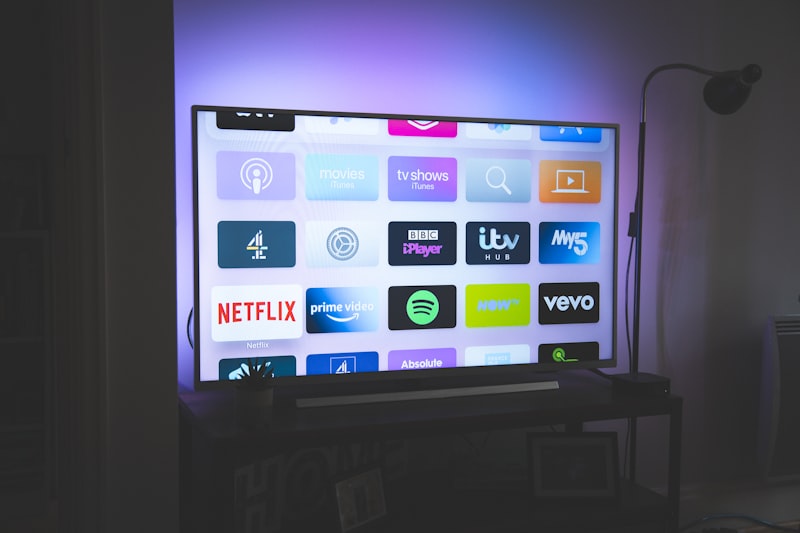
A German living room in 2026 still expects a programme grid on the big screen and a remote that opens Das Erste without digging through a folder of streams. The stack behind that remote is three parts: the line into the flat, the player on the TV, and whether the EPG row is bound to the right XMLTV id.
This note stays on that living-room stack. It is not a channel catalogue and it is not a shop page.
Deutsche Glasfaser, Telekom, and Vodafone from the sofa
The player only looks calm when the line can hold an evening. Deutsche Glasfaser is usually the easy case: enough headroom that the living-room box can keep a small buffer and still change channels without a pause. Telekom fibre sits in the same group for most city flats. Telekom VDSL is a different evening. HD on the main TV is fine. A 4K football row plus someone else on Wi-Fi is where the picture starts to breathe.
Vodafone fibre behaves like Glasfaser. Vodafone cable is the line that still catches people out. The kitchen tablet looks fine. The Saturday night match on the sofa does not. That is shared last-mile capacity, not a broken playlist. Ethernet from the router to the box is the change that actually shows up on the screen.
ISP-by-ISP notes and the wider German channel picture live in the IPTV Society Germany guide.
The player is the living-room interface
A phone player and a sofa player are not the same job. From two metres you need a grid the room can read, a short favourites list that matches how the household actually watches, and a clock that does not jump an hour when CEST flips.
Society's 2025 Germany player comparison is still the place to read interface and EPG behaviour side by side. It is a player note, not a package pitch.
IBO Player is a common living-room pick on German Android TV boxes because the XMLTV bind is a short path and the remote does not bury the guide. That is a fit, not a ranking. Smoother Smart TV apps often look better on day one and then attach Das Erste to a leftover HD or +1 row.
Put one player on the TV the household sits in front of. Then stop adding apps.
EPG matching, not another refresh
German public rows are where name matching goes wrong. Das Erste, Das Erste HD, and a regional WDR clone can all share a pretty label. The token that matters is the XMLTV id on the playlist row.
Society's EPG XMLTV IDs for European public channels is written around SRF, ERT, VRT, and SVT. The order is the same for ARD and ZDF: prove the flagship row against a news slot you can check, map the siblings, leave sports and +1 copies alone.
If the whole grid is blank, you do not have an id problem yet. If the grid is full and Tagesschau sits on the wrong row, you do.
A living-room order that holds
- Wire the box on Vodafone cable. Keep a modest buffer on Telekom VDSL. Leave Glasfaser on a small or automatic buffer.
- Install one player on the TV in the living room, not a second copy on every leftover stick.
- Bind ARD and ZDF by id, refresh once, check a news slot.
- Keep a short favourites list: news, a regional ARD third, the RTL group you actually watch, sport. Do not scroll an 8,000-row Europe file from the sofa.
Channel lists move. The line, the player, and the id bind are the 2026 living-room job.